
 English
  Spanish
  Korean
  Chinese
 The Restoration of the Bakewell Gates
By Lorraine Gilligan, Director of Preservation
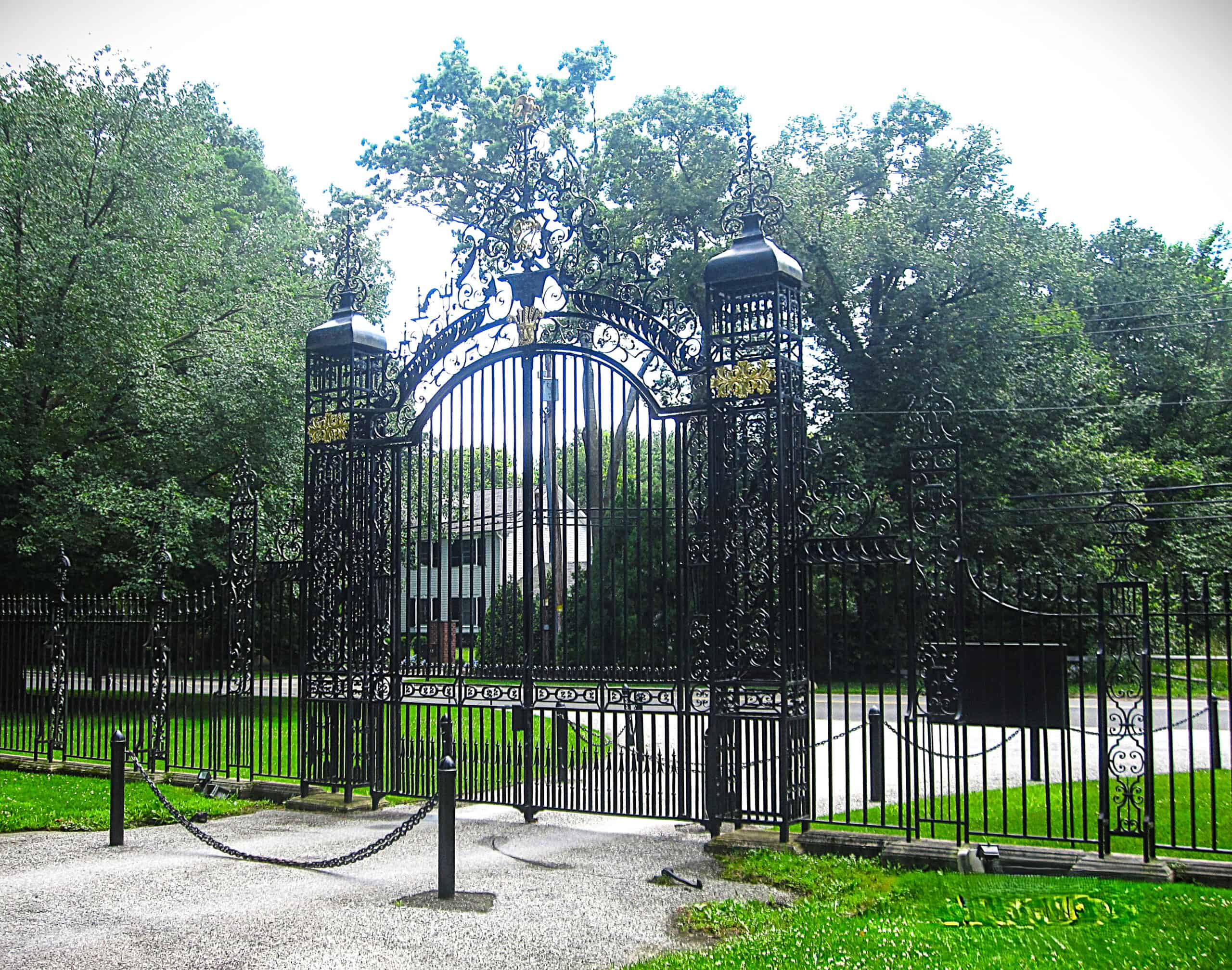
The early 18th century wrought iron gates called the Bakewell Gates at the entrance to Old Westbury Gardens were severely damaged by an automobile soon after the first blizzard in February. The impact originated from inside the property, and while the driver was unhurt, the gate framework was severely mangled, making the entire structure unsafe. It took weeks to find buried portions of the gate towers and fencing due to the second blizzard and mountains of plowed snow.
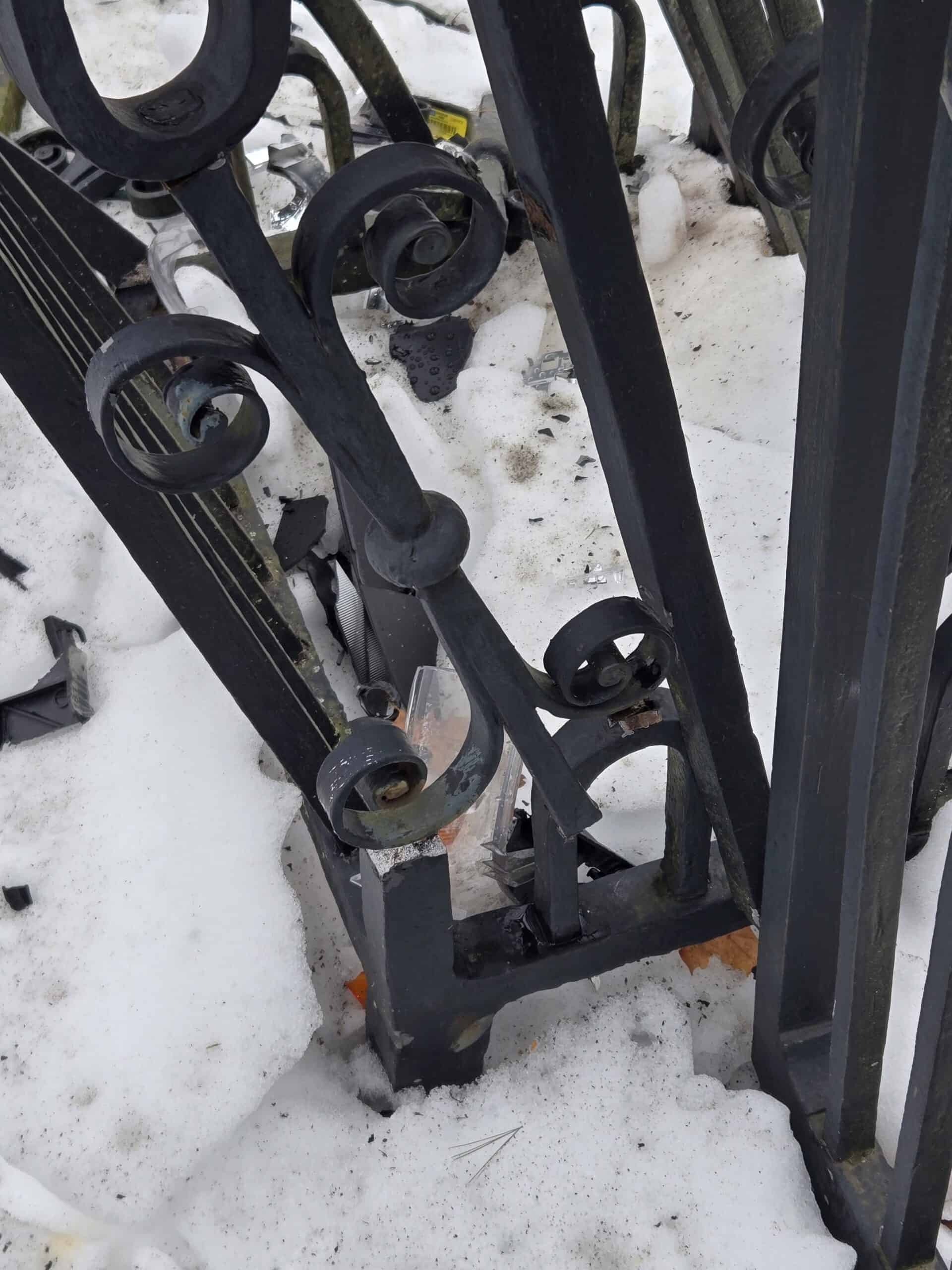
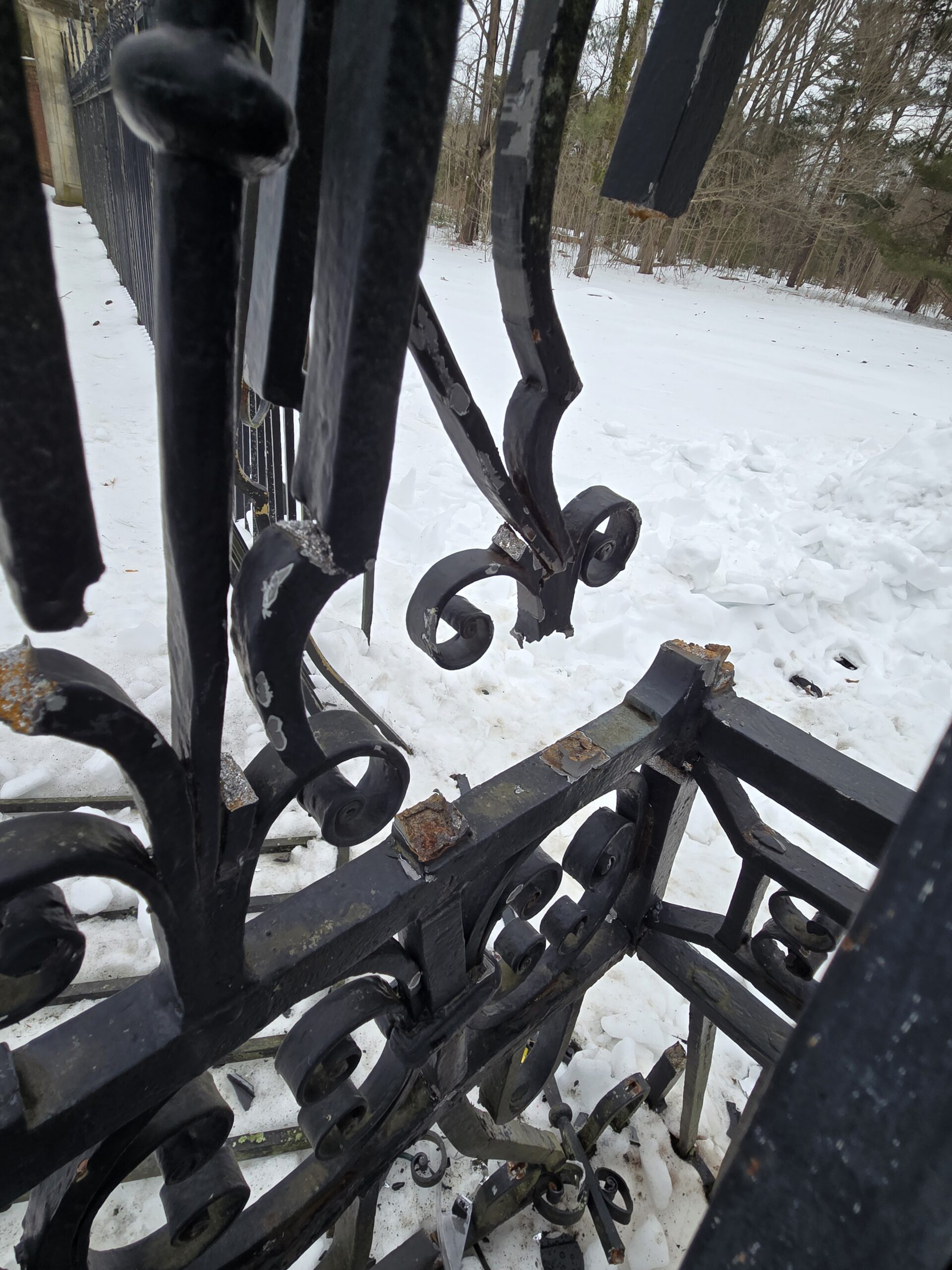
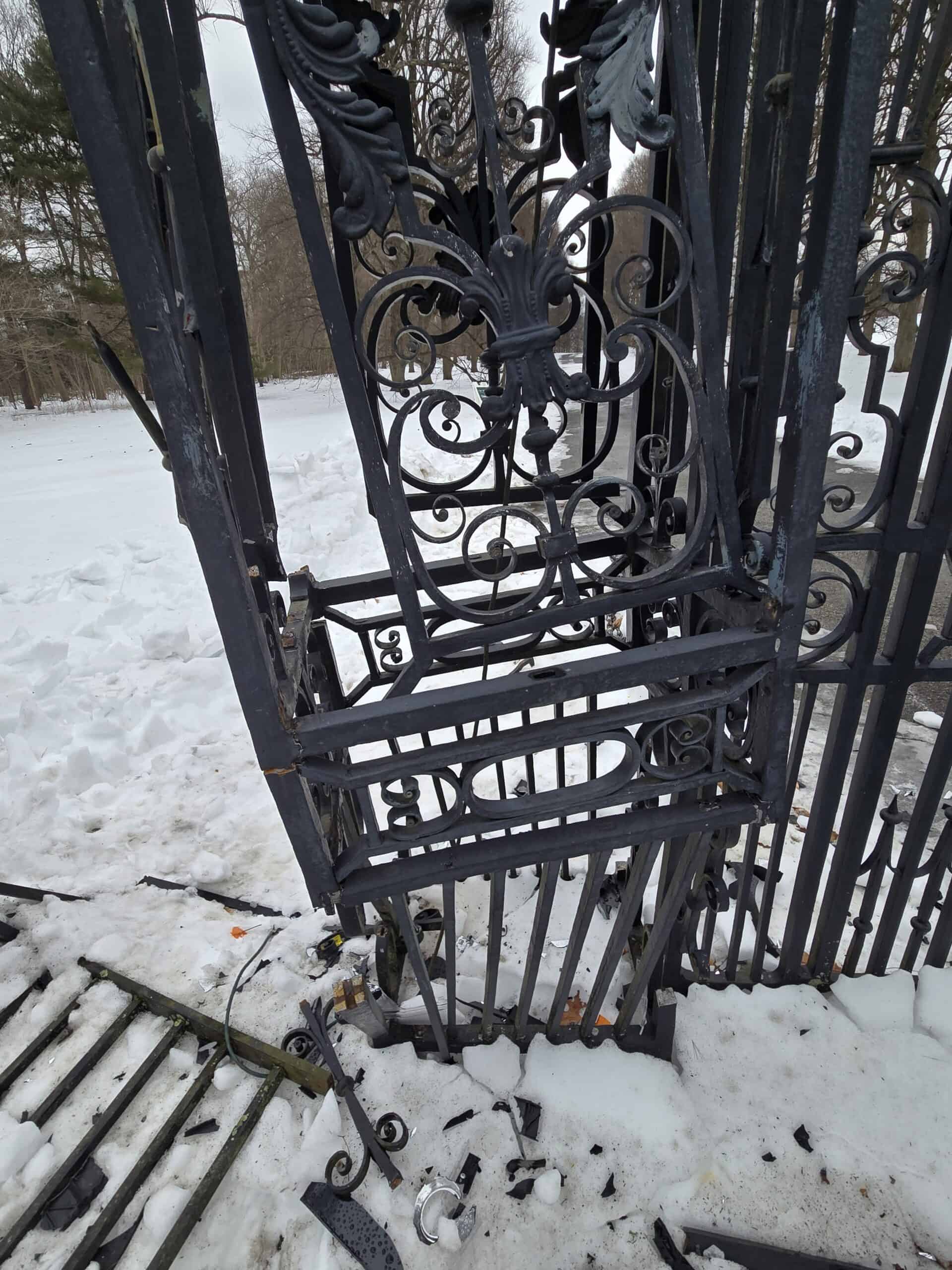
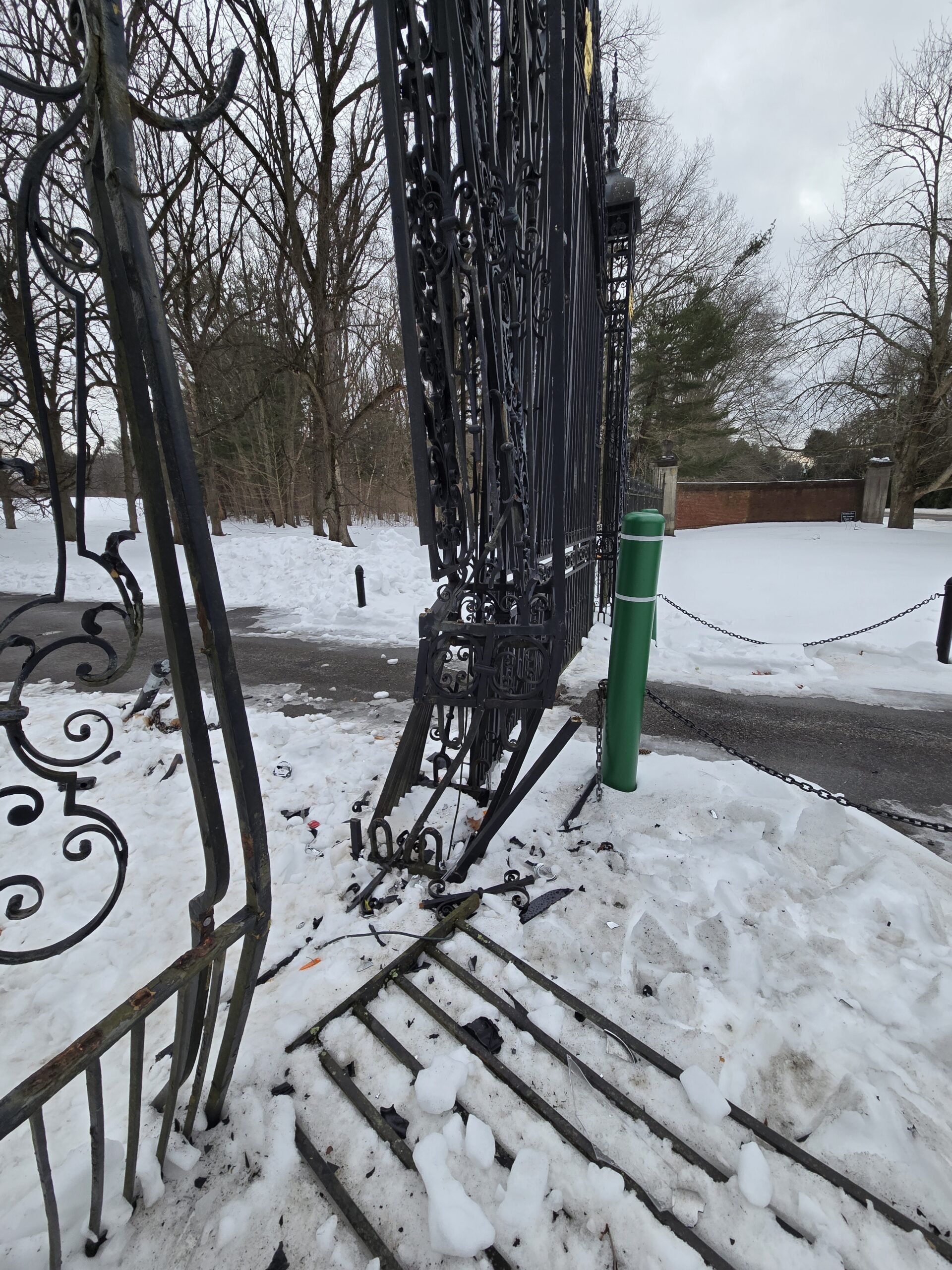
Architectural conservators quickly arrived at the scene to assess the damage and create a scope of work that would be part of a bid package. Metalwork craftsmen highly skilled in the restoration of 300-year-old English ironwork—the composition of which is no longer available—will use salvaged components from similarly aged elements to repair and stabilize the gates in a studio setting.
The Bakewell Gates were originally designed for a wealthy and titled family in Derbyshire, England circa 1703. Robert Bakewell was an early iron craftsman who was establishing a reputation for the quality of his designs and execution. His commissions ranged from interior railings and garden structures to gates and elaborate screens or fencing on either side of the gateway. When Great Britain instituted death taxes in 1894, land rich gentry raised funds by selling family treasures from paintings, rooms, decorative objects, and yes, gates. We know the fourth Viscount Combermere was short on cash and before he sold the entire estate he put the gates up for sale. They were purchased by English iron specialist and historian, J. Starkie Gardner. He would purchase ironwork, advertise its availability in the American editions of Country Life magazine to be purchased and used to adorn the estates of American royalty – steel, railroad, and real estate barons.
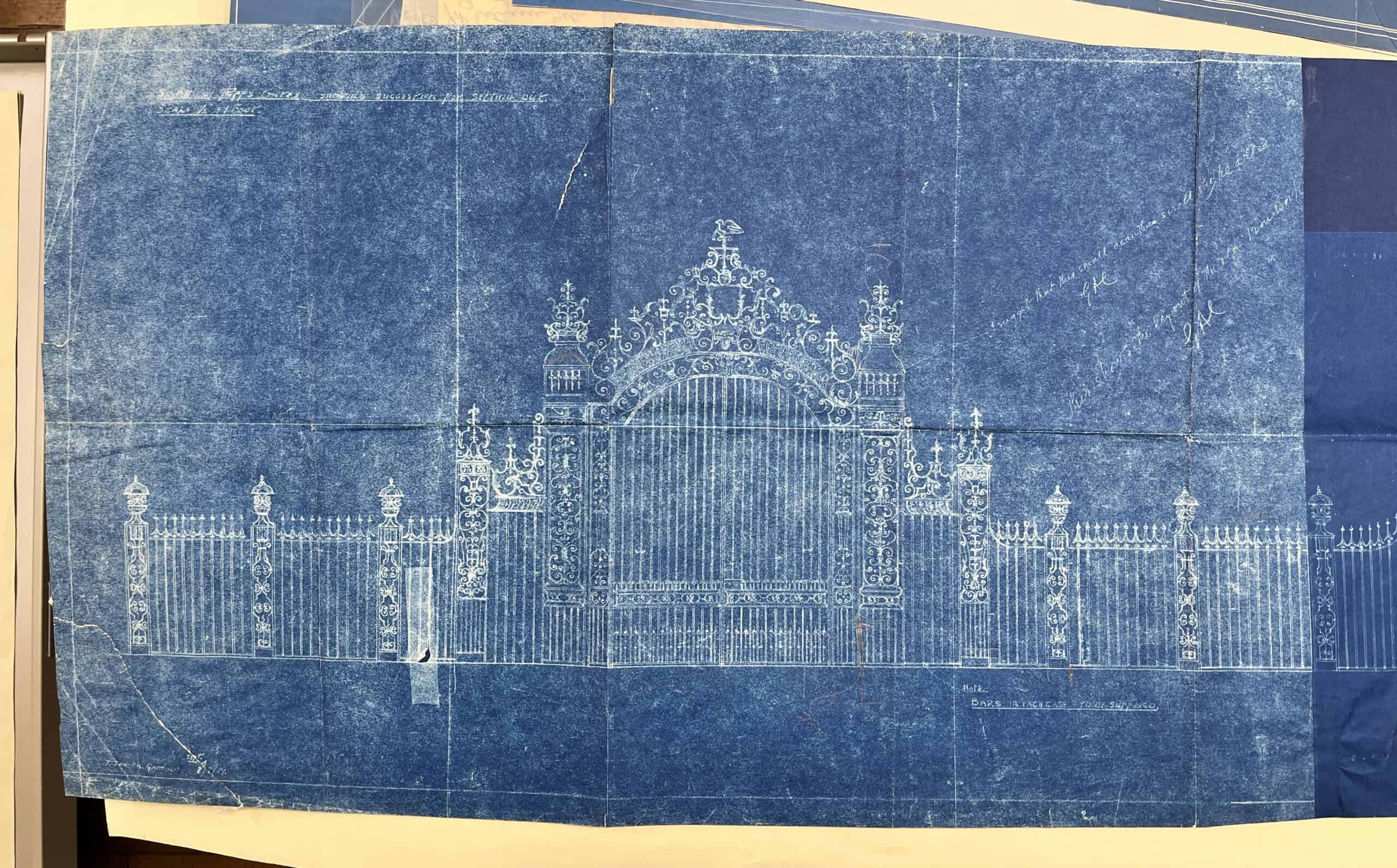
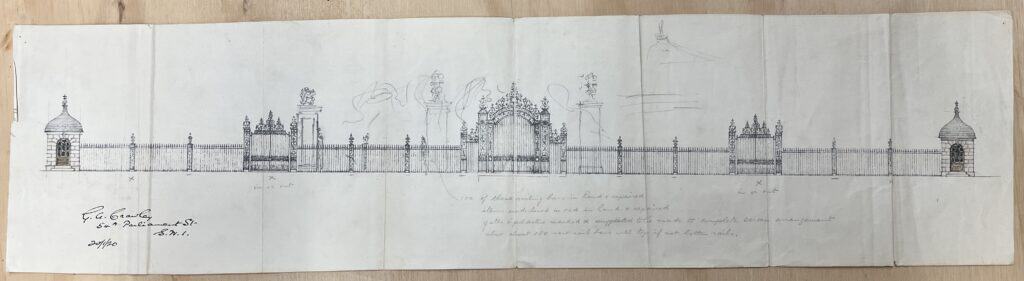
George Crawley, the British aesthete who designed the entirety of the Phipps estate – that is Westbury House and the extensive gardens and lawns – advised Jay Phipps to purchase the gates. Starkie Gardner repaired the gates which had suffered from neglect, painted each element, and so the Bakewell Gates as they have become known, were on their way to America. Crawley’s presentation drawings propose an elaborate screen of secondary gates open to traffic and flanking the Bakewell Gates which would remain closed (see below). This design was influenced by 18th and 19th century English installations. There was discussion about whether the gates should be located north of the Westbury House main entryway on what is now the north lawn or at the current location on Old Westbury Road. There may have been other considerations, and more information may be revealed as the archives continue to be researched.
Over the decades, the Bakewell Gates have been adversely impacted by the volume of traffic on Old Westbury Road between exhaust, salt and debris after a snowstorm, as well as traffic entering and leaving the site through a space originally intended for carriages and carts. The gates underwent major restoration in 1980 after 60 years of benign neglect and, shortly thereafter, were brought down by a delivery truck hitting the overthrow or upper arch of the gates, causing additional damage. The gate restoration is estimated to take several months, and an interim gateway will be installed during that time. If you enjoy the intricacies of metalwork, you will see outstanding examples in the Walled Garden and South Allée.